Monday, October 15, 2018

Margin Notes: Your Invisible Corset

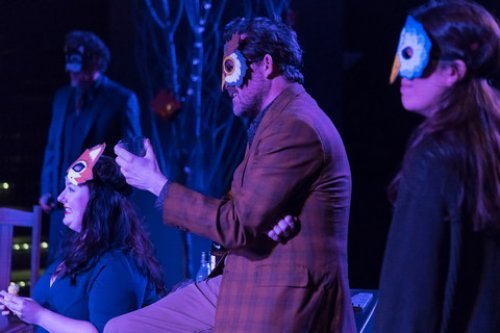
Emily Kitchens as Lucy Westenra.
Photo by Al Foote III.
Your Invisible Corset

Seen on: Saturday, 10/13/18.
My grade: B+

Plot and Background
Bram Stoker's novel Dracula, adapted to modern day and retold through Mina's eyes: Your Invisible Corset examines the stigma surrounding assault survivors, and what self-actualization truly looks like.

What I Knew Beforehand
Only the premise (I've seen several Dracula adaptations, though I've never read the source material). And that I'd reviewed Hunger & Thirst's earlier Pericles: Born in a Tempest.

Thoughts:

Play: Playwright and star Patricia Lynn begins the narrative in medias res (or does she?), with Mina waking in a hospital, unsure of what she remembers and what she doesn't; the play continues to unpack her broken psyche, pulling her into memories that may or may not be hallucinations, guided by her dead friend Lucy, pursued and haunted by Dracula and his servant Renfield. But all is never what it seems and the narrative further deconstructs, as Dracula seduces Mina with promises of autonomy and liberation—freeing her, as he claims, from her invisible corset—all the while tightening his grip on her mind and will. But Mina, a tenured professor and headstrong enough that no man, mystical or otherwise, can keep her shackled, is not content to be the hot potato tossed about in the duel between John Harker and Dracula, nor will she let herself be gaslit or shamed into fear and immobility. Not everything about this updated approach to the story works perfectly, but I was quite taken with the way it attacked and dismantled much of the language of rape culture and emotionally abusive relationships, drawing overt lines between Stoker's original narrative, and conversations happening every day in the public sphere.

Monday, October 8, 2018

Weekly Margin 2018, W40: The Other, Other Woman, Uncle Romeo Vanya Juliet, Then She Fell

10/04/18: The Other, Other Woman
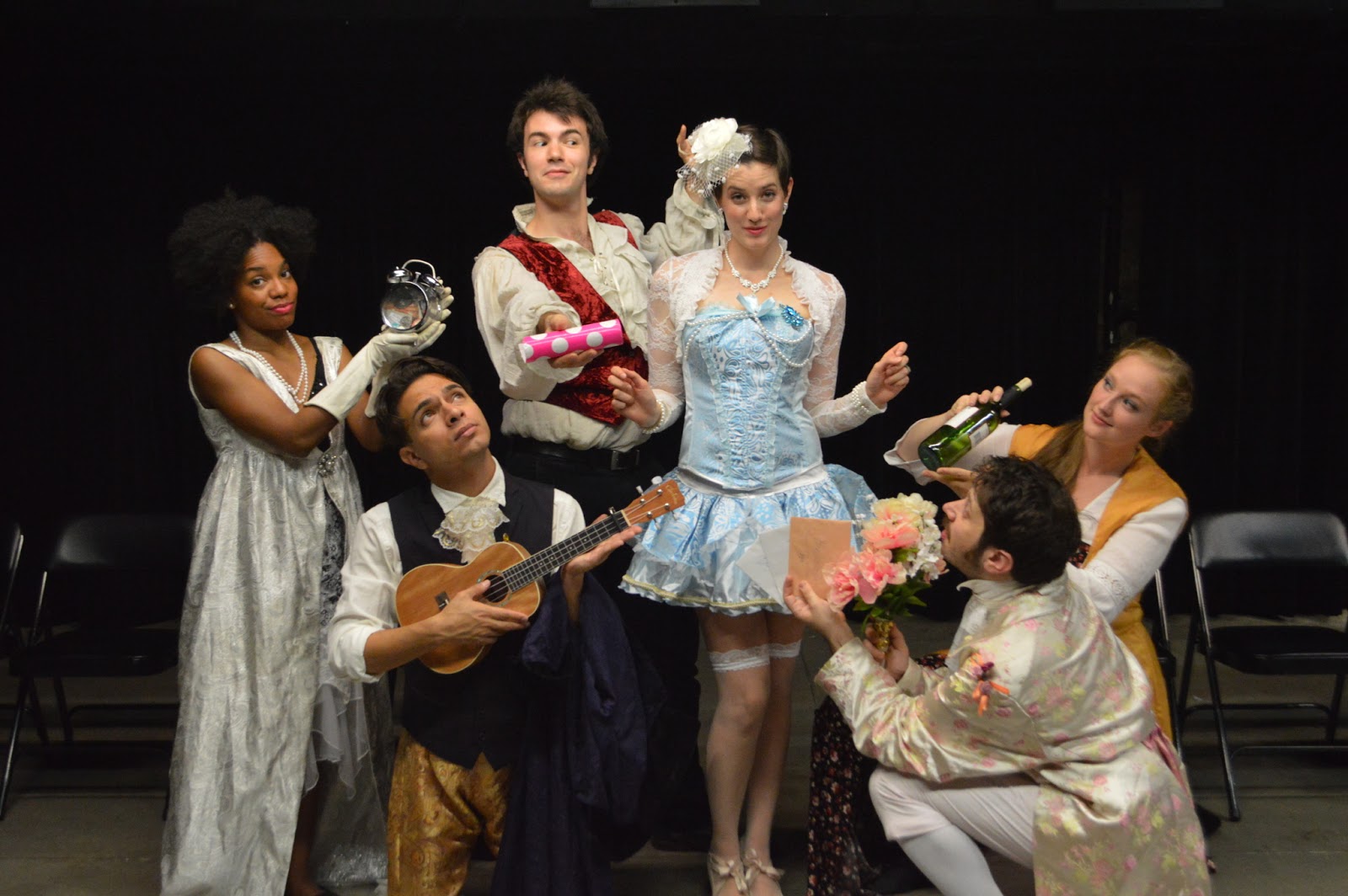
What: A developmental reading of Emily C. A. Snyder's new verse play about polyamory and love-crossed souls in a small town in 18th century France.
And? A lot of talent and potential. Full review here.

Regina Renee Russell, Chris Rivera, Justy Kosek, Amanda Roberts, Joe Raik,
and Bridget Randolph. Photo by Duncan Pflaster.


10/06/18: Uncle Romeo Vanya Juliet
What: Bedlam's mash-up of Chekhov's Uncle Vanya and Shakespeare's Romeo and Juliet.
And? This was not for me, unfortunately. It seemed oddly tame for Bedlam, and the connection between the R&J moments and the more dominant UV moments were not clear. Some good performances, especially from Bedlam regulars Susannah Millonzi and Edmund Lewis, and some interesting choices, but it felt like a lot of missed opportunities.

Randolf Curtis Rand, Zuzanna Szadkowski, Eric Tucker, and Susannah
Millonzi. Photo by Ashley Garrett.


10/07/18: Then She Fell
a repeat visit with friends (2013 review here)

Margin Notes: The Other, Other Woman

Laura Iris Hill as Mother Abbess. Photo by Duncan Pflaster.

Seen on: Thursday, 10/04/18.
My grade: B+

Plot and Background
A developmental reading by Turn to Flesh Productions of Emily C. A. Snyder's new verse play about polyamory and love-crossed souls in a small town in 18th century France.

Disclosure, and
What I Knew Beforehand
I've seen several of my friend Emily's verse plays at this point, so knew we'd be in capable hands, but I had avoided a plot synopsis so I could go in cold. (Continuing disclosure: Not only am I friends with auteur Snyder, I'm also friends with several of the cast members)

Thoughts:

Play: As this was a developmental reading (albeit an extremely polished one) and therefore a work in progress, I thought I would break down my feedback into what worked for me, and what I think could use more work or examination.

What works: Snyder's sparkling wit balanced with sillier humors--she's so clearly happily in her wheelhouse in this medium, and it's a pleasure to witness. The scenes flow swiftly and easily around each other, and the staging is poetic and clear. The polish and clarity of every moment belie all assurances that this is merely a workshop or reading. An able use of the ensemble as storytellers, witnesses, symbols, and people dealing with trying times. An abundance of female roles, of all stripes. When the rhyming couplets break apart into simple and honest speech, the audience takes a collective breath and holds it. The ache of love unexpressed and inexpressible.

What could use some examination: The occasional comic nods to the constraints of rhyming couplets--say, forcing a word into mispronunciation in order to make the rhyme perfect--would land more strongly if there weren't a number of slant rhymes elsewhere. Although the first act seems to champion polyamory, I was a bit disappointed to see that the second act paired nearly everyone off (except the queer characters), rejecting polyamory as an unsustainable option (indeed, Madame Evolette is soundly chastised by her husband Monsieur Beaudemonde for honoring their marriage contract so faithfully by indulging in countless sexual encounters but giving her heart to no one else). I felt uncomfortable watching what seemed like callous treatment of an emotionally unstable woman (played, in the first half, for laughs) and her abusive behavior toward her husband, and even more uncomfortable when that couple makes some fairly ugly choices which they know will make neither of them happy (choices which honestly seemed made in order to achieve a specific end in the plot, rather than following the characters on a journey of growth and change). I was disappointed that, with so many strong, varied, and interesting women portrayed in the piece, their lives all still seem entirely governed by the choices of the two male foils in the narrative, Beaudemonde and Valentine.

There's beautiful potential in this piece, piercing heartache and hilarity both.

Monday, October 1, 2018

Weekly Margin 2018, W39: The Waverly Gallery

9/27/18: The Waverly Gallery
What: Kenneth Lonergan's memory play about Gladys, a woman slowly succumbing to Alzheimer's, who runs a small obscure gallery on Waverly Place, and how her family copes.
And? I was really really bored. Sorry guys.

Monday, September 24, 2018

Weekly Margin 2018, W38: Be More Chill, I Was Most Alive With You, Bernhardt/Hamlet, Bigfoot Stole My Wife (and Trudy Carmichael's Character Cabaret)

9/19/18: Be More Chill
What: My easiest allusion to make here is Little Shop of Horrors meets 21st century high school popularity woes. Be More Chill is the new hot show among the youths (who, for the record, were very well behaved during the show), about the lengths to which people will go to achieve popularity. They've already announced a Broadway transfer.
And? It didn't blow me away, but it's fine. Everything felt like it was at level 11, which is a bit exhausting, especially in a relatively intimate space. The cast is funny, though I don't love the timing of the actor who played all the adults (but his bio tells me he's collaborated with the composer for over a decade, so he's not going anywhere). Jason Tam is fantastic as an increasingly glammed-out Keanu-inflected Squip, and it's nice to see a fairly diverse cast. Musically I felt a lot of echoes of this genre's (youth-geared) predecessors (opening number recalling Dear Evan Hansen themes, "The Smartphone Hour" causing simultaneous Bye Bye Birdie and JRB's 13 flashbacks, etc.), which isn't necessarily a criticism (I can still recall many of the melodies days later). I think the show definitely knows its market, and that market is responding with great enthusiasm.


Jason Tam and Will Roland as The Squip and Jeremy. Photo by Maria Baranova.

9/21/18: I Was Most Alive with You
What: Craig Lucas's new play at Playwrights Horizons, inspired by his own struggles with addiction, about a family who must come to a peace with the things they are helpless to change. Taking a heavy allegorical parallel from the Book of Job, I Was Most Alive with You is performed with a shadow cast of Deaf actors, performing the show in ASL (this is not a gimmick: one of the characters, Knox, is Deaf (played by noted Deaf actor Russell Harvard), and another character, Farhad, is losing his hearing.
And? Very powerful theater. Both the ground level cast and the elevated shadow cast were compelling and daringly vulnerable in their performances, making it equally as engaging to watch one cast as the other. Russell Harvard, for whom the play was written, is gut-wrenching and poetic. The beauty of his signed prayer, contrasted with the clumsy but well-intentioned signing of his family, or even the more eloquent signing of the shadow cast, highlights the purity of his soul, and making it ache further, when that beauty is lost. And the ending, you guys, is perfect. Bring tissues.